We could be mistaken for thinking that the impacts of climate change have a minimal impact on UK farming, but that’s not the case. Farmers and scientists jointly recognise the significant changes that are occurring at local levels including flooding, drought, plant and pest challenges, deviations in biodiversity, decreasing crop yields and declining soil health.
Farming is central to the nation’s economy and with climate change having a negative impact on our farms’ soil health and a greater susceptibility to crop diseases, we need the brightest minds in plant and crop science to collaborate with those in agriculture. Collaborating together, they can help to remodel farming so that it can be preserved as a sustainable, attractive and profitable long-term business capable of delivering the quality and quantity of food our country needs.
Steps have been taken already to address some of the issues facing modern-day farmers. Cohorts of farmers, agriculture organisations and research scientists here at Norwich Research Park have been working together to generate ideas to resolve some of the threats farming is facing.
There is widespread agreement that the impacts of climate change cannot be addressed independently of the broader issues currently facing UK farming. The Norwich Institute for Sustainable Development, which is based at Norwich Research Park, has teamed up with the Royal Norfolk Agricultural Association (RNAA) to engage with the farming and food producer industry. It has hosted a number of roundtable events, for example, at the Royal Norfolk Show and the Norfolk Landscape Conference, at which there was participation from scientists right across the Park campus including the University of East Anglia, Tyndall Centre for Climate Change Research and the John Innes Centre.
Farmers require both effective adaptation measures for the multiple impacts of climate change and measurable, financially-valorised approaches to store carbon, mitigating climate change impacts. Through these collaborations they are developing an approach of engagement and applied research tailored to help solve these issues.
A number of specialist events have been organised by Anglia Innovation Partnership, the campus management company for Norwich Research Park, to generate a series of science discovery activities, programmes and projects to ultimately deliver solutions that will bring improvements to things like the health of our soil, crop resistance to disease, crop yields and resistance to extreme temperatures.
Success has already been achieved from an ‘Explorer Forum’ event which investigated ways to improve sugar beet’s resistance to a disease called Virus Yellows that can devastate harvests. An initiative was established between British Sugar and a number of organisations based at Norwich Research Park, including the British Beet Research Organisation (BBRO), Tropic, a biotech company with a focus on agriculture, and the John Innes Centre. The project secured funding to use Tropic’s gene editing techniques to identify the pieces of sugar beet’s DNA that can be ‘switched on’ to resist Virus Yellows.
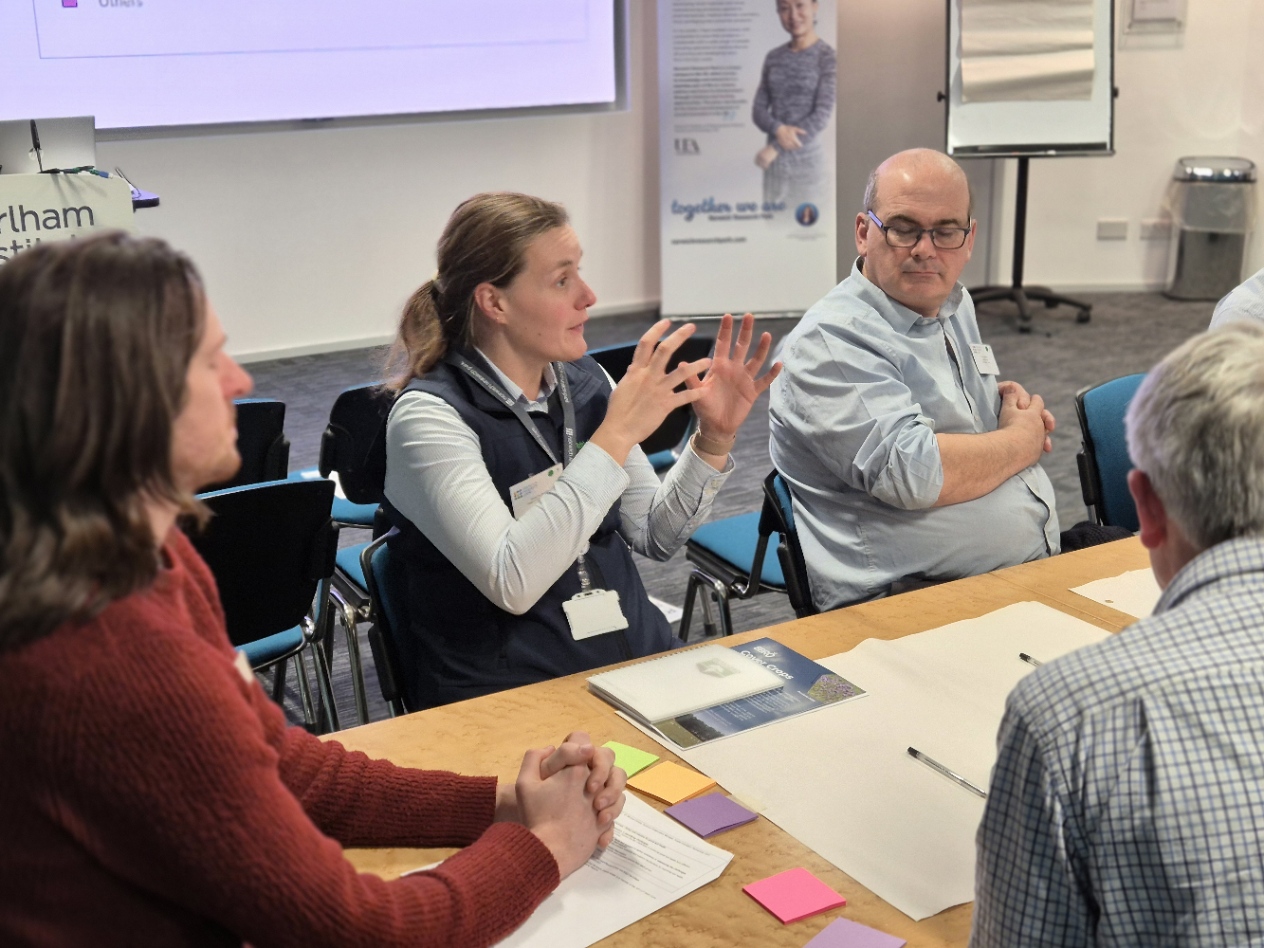
In October 2025, a one-day workshop event was hosted at the Norwich Research Park, as part of AgriTech Week, which focused on soil health. Attended by farmers, representatives from agricultural organisations such as the Environment Agency, Soil Association as well as agri-businesses and researchers from across the Park’s campus, the event generated a number of suggestions and recommendations on how the industry can introduce improvements for soil health.
Anglian Innovation Partnership science collaboration manager, who organised the event said, “Most people across agriculture recognise that we have enormous challenges to face in safeguarding farming against the negative impacts of climate change. At Norwich Research Park we are fortunate to have some of the world’s leading plant and crop scientists so we are actively looking to engage with the farming community to try and discover new solutions to the issues they face. Nowadays, innovation and collaboration between farmers and scientists has to be a part of the day-to-day activities.”
Chris Molyneux, a kale farmer from Lancashire who attended the event said, “I travelled down from Lancashire for this event because Norwich Research Park is probably the furthest advanced with its thinking in its effort to engage with farmers on the important issues. Farmers are on the frontline of soil health and climate change issues so collaboration with the science community is vital to address the issues all this throws up.”
Andrew Spinks, the Chair of YIELD, the RNAA’s network for younger farmers, is a passionate believer in developing partnerships with the science community. He said, “Our thinking has been significantly enhanced by building our involvement with the research organisations at Norwich Research Park. It seemed important to include, in our programme of events, an exploration of food security from a geopolitical perspective, but we also need to think about this in response to climate change – our whiplash weather – and disease threats, be they in animals or plants. We all want to have a positive impact on agriculture in Norfolk and we are really lucky to have the best expertise and resource on our doorstep”
The UK economy is dependent on a healthy farming sector so it is vital that we find sustainable ways for it to continue for future generations. Fortunately, we have the world-leading researchers on our campus that are applying their expertise to the practical issues facing the agricultural industry, that will benefit the people of the UK and beyond.